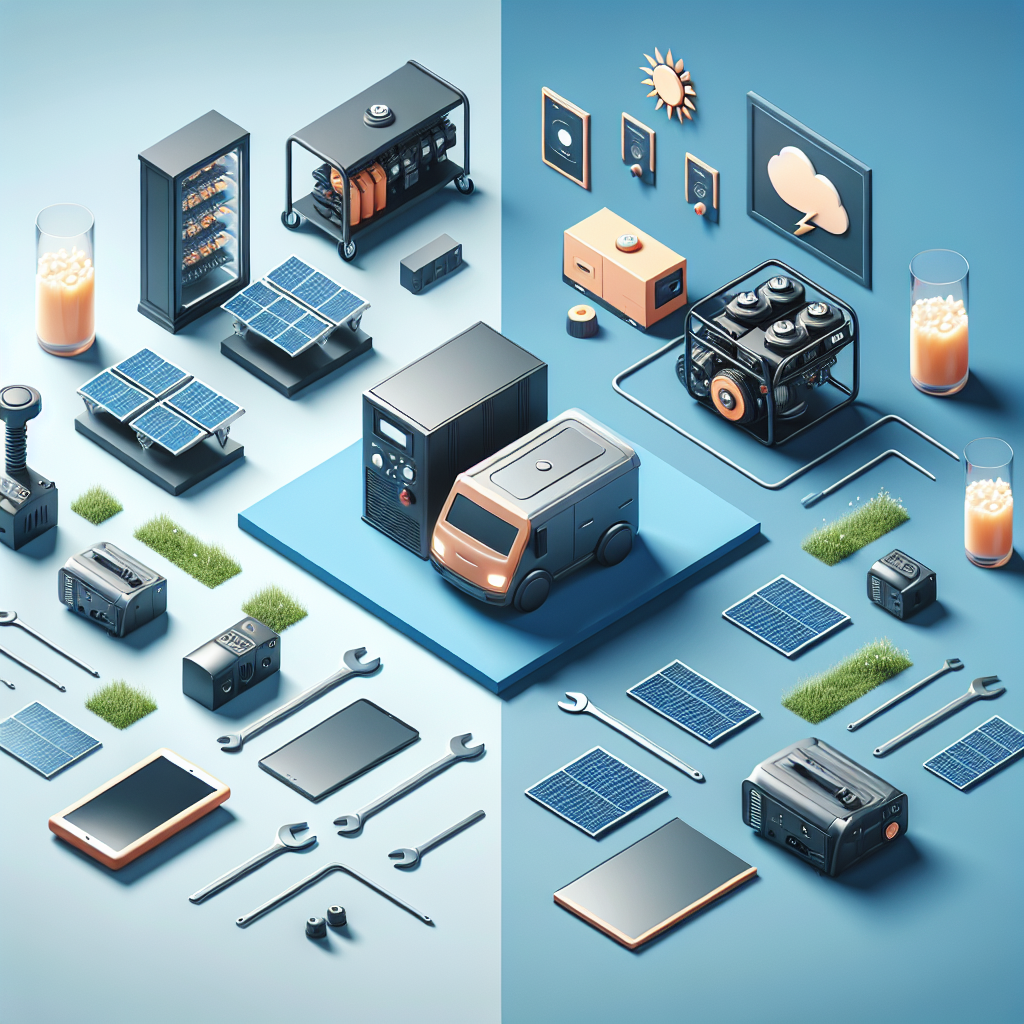
In the realm of energy solutions, the debate between battery storage and generators is both essential and timely. As the world edges closer to a future dominated by renewable energy sources, the choice between these two power solutions becomes increasingly significant. This article delves into the nuances of battery storage and generators, assessing their advantages, disadvantages, and suitability for various applications. By understanding these differences, consumers and businesses can make informed decisions regarding their energy needs.
Understanding Battery Storage
Battery storage systems have gained prominence in recent years, primarily due to advances in technology and the growing emphasis on sustainability. These systems store energy generated from renewable sources, such as solar and wind, and release it when required. The most common types of batteries used in these systems include lithium-ion, lead-acid, and flow batteries.
Advantages of Battery Storage
1. **Environmental Impact**: Battery storage systems are environmentally friendly, especially when paired with renewable energy sources. They produce no emissions during operation, thus contributing to a reduction in carbon footprint.
2. **Efficiency**: Modern battery systems boast high efficiency rates, often exceeding 90%. This efficiency means that a significant portion of stored energy is available for use, minimizing wastage.
3. **Scalability**: Battery systems are highly scalable. They can be customized to meet specific energy demands, from small residential setups to large industrial applications.
4. **Silent Operation**: Unlike generators, battery systems operate silently, making them ideal for residential areas and noise-sensitive environments.
Disadvantages of Battery Storage
1. **Initial Cost**: The upfront cost of battery storage systems can be high, particularly for high-capacity setups. However, this cost is often offset by long-term savings in energy bills.
2. **Limited Storage Duration**: Batteries typically have a limited storage duration, meaning they can only supply power for a certain period before needing to be recharged.
3. **Degradation Over Time**: Batteries degrade over time, leading to a gradual decline in storage capacity and efficiency.
Exploring Generators
Generators have been a staple in providing backup power for decades. They convert mechanical energy into electrical energy, typically using fuels such as diesel, gasoline, or natural gas. Generators are available in various sizes, from portable units to large installations suitable for industrial use.
Advantages of Generators
1. **Immediate Power Supply**: Generators can provide immediate power supply during outages, making them ideal for emergency situations.
2. **Long Duration Power**: Unlike batteries, generators can run for extended periods, provided there is a sufficient fuel supply. This makes them suitable for long-duration power needs.
3. **Cost-Effective for Short-Term Use**: For short-term power requirements, generators can be more cost-effective compared to battery systems.
4. **Wide Availability**: Generators are widely available and can be used in various settings, from residential to industrial applications.
Disadvantages of Generators
1. **Environmental Concerns**: Generators emit greenhouse gases and other pollutants during operation, contributing to environmental degradation.
2. **Noise Pollution**: Generators can be noisy, which may be a concern in residential areas or quiet environments.
3. **Fuel Dependency**: The reliance on fossil fuels makes generators vulnerable to fuel price fluctuations and availability issues.
4. **Maintenance Requirements**: Generators require regular maintenance to ensure optimal performance and longevity.
Comparative Analysis
When comparing battery storage and generators, several factors come into play. These include efficiency, environmental impact, cost, scalability, and application suitability.
Efficiency and Environmental Impact
Battery storage systems generally outperform generators in terms of efficiency and environmental impact. The high efficiency of batteries ensures minimal energy loss, while their operation produces no emissions. In contrast, generators, though reliable, contribute to pollution and have lower efficiency due to energy conversion processes.
Cost Considerations
The cost comparison between batteries and generators is complex. While the initial investment for battery systems is higher, they can lead to long-term savings through reduced energy bills and maintenance costs. Generators, on the other hand, may have lower upfront costs but incur ongoing expenses related to fuel and maintenance.
Scalability and Application Suitability
Battery systems offer superior scalability, making them adaptable to various energy needs. They are particularly suitable for applications where silent, clean, and efficient power is required. Generators, while versatile, are better suited for scenarios where long-duration power is necessary, such as during prolonged outages or in remote locations without access to the grid.
Future Trends and Innovations
The future of energy storage is poised for exciting developments. Innovations in battery technology, such as solid-state batteries and advanced lithium-ion variants, promise to enhance efficiency, reduce costs, and extend lifespan. Additionally, the integration of smart grid technologies and artificial intelligence is expected to optimize energy management and distribution further.
For generators, advancements in fuel efficiency and the development of hybrid systems combining traditional fuels with renewable energy sources are likely to reduce their environmental impact and improve performance.
Conclusion
The choice between battery storage and generators ultimately depends on specific needs and circumstances. Battery systems offer a sustainable and efficient solution for those prioritizing environmental impact and long-term cost savings. They are particularly suited for residential and commercial applications where silence and cleanliness are paramount. Generators, with their reliability and ability to provide long-duration power, remain a critical option for emergency situations and locations with limited grid access.
As technology evolves and the global focus on sustainable energy intensifies, both battery storage and generators will play vital roles in meeting the world’s diverse energy demands. By weighing the advantages and disadvantages of each, consumers and businesses can make informed decisions that align with their energy goals and values.
#ChatGPT assisted in the creation of this article.